
Benefits of Heated Yoga for Recovery: What to Know

Table of Contents
Why Heated Yoga Fits Into a Recovery Routine
Hot Yoga for Muscle Recovery: What the Evidence Shows
Perceived Recovery vs. Measured Recovery
What Heat Actually Changes in the Body
Heated Yoga After Workout: Timing, Frequency, and Session Length
How Often to Do Hot Yoga for Recovery Without Overdoing It
A Practical Recovery-Focused Heated Yoga Session Plan
How to Modify the Plan
Poses That Support Recovery
When to Stop
Heated Yoga Benefits and Risks: What to Weigh Before You Go
Heated Yoga vs. Other Recovery Methods
Conclusion
Frequently Asked Questions
Last Updated: October 20, 2026
Why Heated Yoga Fits Into a Recovery Routine
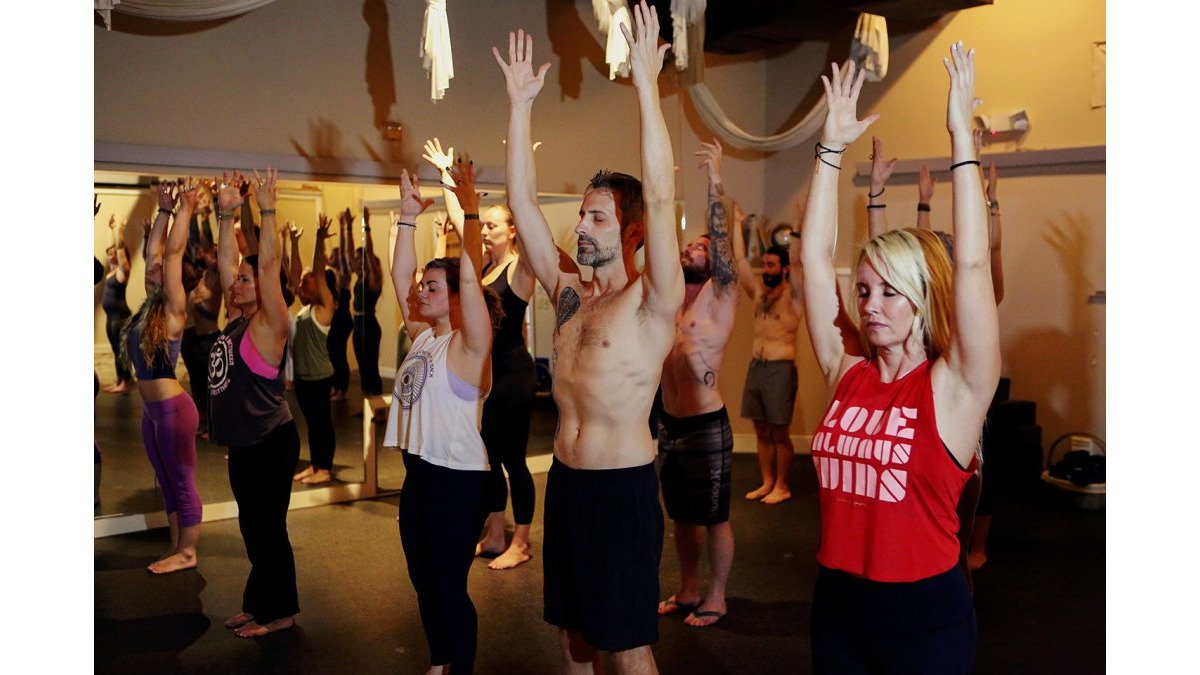
Heated yoga is a style of yoga practiced in a room warmed well above normal studio temperature, and it earns its place in recovery because warmth changes how your body feels and moves.
Recovery is not a single event. It is a process your body runs between workouts.
Heat helps with some of that. It does not help with all of it.
Here is the honest version: a heated class can make you feel better and move better.
According to the American College of Sports Medicine, recovery methods work best when they match the stress you put on your body.
Hot Yoga for Muscle Recovery: What the Evidence Shows
The evidence for hot yoga for muscle recovery is mixed, and it is thinner than most studio marketing suggests. Most studies look at general hot yoga practice, not recovery after hard training. That distinction matters, because the recovery question is narrower: does heat plus gentle movement help you bounce back from a specific bout of strength or endurance work?
To answer it honestly, separate the outcomes into two buckets.
What the research and common practice do support:
Heat raises blood flow to working muscles, which can support the delivery of oxygen and nutrients and the clearance of metabolic byproducts.
Gentle movement under heat can lower perceived muscle tension and improve range of motion during and immediately after class.
Many practitioners report less muscle soreness in the 24 to 48 hours after a heated class, though most of that evidence is subjective.
What the research does not clearly support:
Faster repair of muscle tissue at the cellular level.
Measurable gains in strength or power the next day.
Any effect that beats sleep, protein intake, and total calorie balance.
Perceived Recovery vs. Measured Recovery
Perceived recovery is how you feel. Measured recovery is what your body can actually do.
Those two things often disagree. You can leave a warm room feeling loose and restored while your muscles are still carrying fatigue from yesterday's training.
A practical way to track both is to log three things after each heated recovery session:
Subjective readiness, a simple 1-to-10 score for how loose, energetic, and sore you feel.
Objective output, the next day's warm-up reps, pace, or lift numbers compared with your baseline.
Symptom check, sleep quality, resting heart rate, and any lingering dizziness or headache.
When the subjective score rises but the objective output falls for a week or more, the heat is adding stress rather than removing it.
What Heat Actually Changes in the Body
Heat does three things that are relevant to recovery, and none of them is tissue repair.
Vasodilation. Blood vessels widen, blood flow to skin and muscle increases, and you sweat more. That can make stiff tissue feel more pliable and can help you tolerate longer holds.
Reduced pain perception. Warmth and gentle movement can temporarily raise your threshold for discomfort, which is why a sore hip feels better in a hot room than on a cold floor. That is a real effect, but it is a window, not a repair.
Added cardiovascular and thermal load. A heated class is not passive. Your heart rate rises, you lose fluid, and your core temperature climbs. For a well-rested athlete that is manageable. For an under-recovered one, it is another stressor on the same ledger as training.
That last point is the one most studio marketing skips. Heat is a tool with a dose. Used after an easy day or on a rest day, it can help you move and feel better. Stacked on top of a hard session or a poor night's sleep, it can slow you down.
Key Takeaway Heated yoga is best understood as a mobility and relaxation tool with a real but modest recovery effect, not a repair mechanism. Track how you feel and how you perform, and let the two together tell you whether it is helping.
Heated Yoga After Workout: Timing, Frequency, and Session Length
Heated yoga after a workout works best when you keep it short, gentle, and separate from your hardest training days. Timing matters more than intensity here.
Use these guidelines:
Situation | When to Go | Session Length | Intensity |
Same day, after a hard session | 2+ hours after | 30-45 min | Gentle, low flow |
Next day, sore and stiff | Morning or evening | 45-60 min | Moderate flow |
Rest day | Any time | 45-60 min | Moderate to strong |
Before a race or heavy lift | Skip it | n/a | n/a |
Two rules keep this safe. First, do not go straight from a hard workout into a hot room. Cool down, eat, and hydrate first. Second, treat a recovery class as recovery. If you push to your limit, you've added stress instead of removing it.
How Often to Do Hot Yoga for Recovery Without Overdoing It
Most people do well with two to three heated classes per week, and no more than one on back-to-back days. How often to do hot yoga depends on your training load, your heat tolerance, and how well you sleep.
Signs you are overdoing it:
Feeling wiped out for hours after class
Poor sleep on class nights
Lingering dizziness or headache
Watch Out Stacking hot classes on top of heavy training is the most common mistake we see. Heat adds stress to your body, so it counts toward your weekly load. If your legs are wrecked from a long hike, a hot power class will slow recovery, not speed it up.
Beginners should start with one class per week and build up. Heat tolerance takes time. There is no prize for rushing it.
A Practical Recovery-Focused Heated Yoga Session Plan
Here is a 45-minute recovery session you can take into any warm class. The goal is not to sweat hard. The goal is to move slowly, breathe through your nose, and leave feeling looser than you arrived.

Before you start (5 minutes)
Drink 12 to 16 ounces of water with electrolytes if you sweat heavily.
Tell the instructor it is a recovery day so they can offer modifications.
Set an intention to stay at about 60 to 70 percent of your usual effort.
Warm-up (8 minutes)
Cat-cow, slow, 10 rounds, syncing breath to movement.
Child's pose with side reach, 1 minute each side.
Seated neck and shoulder rolls, 1 minute.
Main flow (25 minutes)
Low lunge, hold 60 seconds each side. Use blocks under both hands if your hips feel tight.
Half pigeon, hold 90 seconds each side. If your knee complains, switch to figure-four on your back.
Seated forward fold, hold 60 seconds. Bend your knees as much as you need.
Cool-down (12 minutes)
Happy baby, 2 minutes.
Legs up the wall, 3 minutes. This is a good moment to sip water.
Savasana, 5 minutes. Stay awake enough to notice your breathing.
How to Modify the Plan
If you are very sore: cut the main flow to 15 minutes and double the cool-down.
If you are heat-sensitive: position your mat near the door, take breaks in child's pose, and leave the room for a minute if you feel dizzy.
If you are new to heat: start with one class per week and build up over four to six weeks.
Poses That Support Recovery
The best recovery poses are held longer and moved through slower. Hip openers, gentle twists, and forward folds calm muscle tension without loading the joints. Avoid deep backbends and fast standing sequences on recovery days. Save those for your strong days.
When to Stop
Heat adds stress, so know the signs that a recovery session has turned into a stress session:
Dizziness, lightheadedness, or a sudden cold sweat.
Nausea or a headache that builds during class.
A racing heart that does not settle within a minute of resting.
Any sharp pain in a joint or a muscle that feels worse, not better, as you hold.
If any of these appear, leave the room, sit down, drink water, and cool off. A recovery class that ends early is still a recovery class. A recovery class that pushes through warning signs is not.
Pro Tip Treat the session as a mobility snack, not a workout. If you finish feeling wiped out, you went too hard for a recovery day. The right intensity leaves you feeling better than when you walked in, not depleted.
Heated Yoga Benefits and Risks: What to Weigh Before You Go
Heated yoga benefits and risks both come from the same source: heat. The warmth that loosens tight muscles also raises your body temperature and makes you sweat more.
Benefits people report:
Greater range of motion during class
Less stiffness the day after training
Better mood and lower stress
A stronger sense of mental calm
Risks to respect:
Dehydration and dizziness
Overstretching because you feel looser than you are
Heat exhaustion, especially in beginners
Pro Tip Drink water before class, not just during. Add electrolytes if you sweat heavily. And tell your instructor it's a recovery day, so they can offer beginner modifications. Our instructors at Hot Asana Studio build modifications into every class for exactly this reason.
Anyone with a heart condition, pregnancy, or a recent injury should check with a doctor before trying a heated class.
Heated Yoga vs. Other Recovery Methods
Heated yoga sits in the middle of the recovery pack. It is more active than a massage and less passive than a nap.
Method | Best For | Effort | Cost |
Heated yoga | Mobility plus calm | Low to moderate | Class fee |
Foam rolling | Tight spots, quick | Low | Low |
Massage | Deep tension | None | Higher |
Cold plunge | Post-competition | None | Varies |
Sleep | Full-body repair | None | Free |
What most guides miss is that these methods stack. A short hot class, a foam roller at home, and a full night's sleep beat any single method on its own.
For outdoor athletes in the Mount Washington Valley, the warm room also solves a practical problem: you can move gently even when the weather outside is brutal.
Conclusion
Recovery is a habit, not a single class. The challenge is building a routine that fits your training week without adding stress you don't need.
That is where we come in. Hot Asana Studio offers heated yoga classes for all levels, with expert-led instruction and beginner modifications built in.
Register now and give your body the recovery routine it has been asking for.
Frequently Asked Questions
Can heated yoga help with muscle recovery?
It can help you feel looser and more relaxed, which many people read as recovery. Heat raises muscle temperature and blood flow, and gentle movement through a range of motion can ease stiffness and muscle tension after training. What the research does not yet show clearly is faster repair of muscle damage or quicker gains in strength. Treat heated yoga as a comfortable active recovery option rather than a proven treatment for soreness, and keep the session gentle so it supports recovery instead of adding training load.
Should you do heated yoga on a rest day?
A gentle heated class can work well as active recovery on a rest day, especially if you keep the effort low and skip intense standing sequences. The heat adds a cardiovascular and thermal load, so a hard class is not really rest. If you are sore, dehydrated, or slept poorly, choose a slower class or take a full rest day instead. Beginners should start with one light session and see how they feel the next day before making it a routine.
How often should you do hot yoga for recovery?
Most people do well with one to two recovery-focused heated sessions per week alongside their regular training, keeping other days for rest or lighter movement. Frequency depends on your heat tolerance, hydration, and overall training load. Watch for signs you are overdoing it, such as lingering dizziness, poor sleep, or soreness that does not settle. If you are new to heated yoga, begin with one class per week and build up gradually rather than jumping into daily practice.
What are the downsides of heated yoga for recovery?
The main risks are dehydration, overheating, dizziness, and added strain on the heart and lungs from heat exposure. Pushing hard in a hot room after a tough workout can add stress rather than relieve it. People with heart conditions, low blood pressure, or pregnancy should check with a qualified professional before starting. Arrive hydrated, take breaks, and leave the room if you feel faint. A good instructor will offer beginner modifications and encourage you to pace yourself.
Register Now

Comments