
Best Pilates Strength Hybrid Routine: 7 Workouts to Try

Last Updated: October 23, 2026
Quick Summary
The best Pilates strength hybrid routine pairs controlled, core-focused Pilates movements with progressive resistance work three to four sessions a week, mixing mat, wall, or reformer Pilates with dumbbells, bands, or bodyweight training. This Pilates strength hybrid covers each method's blind spots: Pilates builds trunk control and mobility, while strength training builds load-bearing capacity.
Hot Asana Studio is our top pick for instructor-led hybrid classes combining heated Pilates and sculpt work.
Pilates x Lift offers a defined 4-week plan pairing muscle-building sessions with mobility work.
Daily Burn's guide includes six foundational exercises and a four-week beginner plan with no equipment.
Keep at least one rest day between heavy strength sessions and never stack a heavy lower-body day against long wall Pilates.
Progress one lever at a time: load, control, complexity, or volume, only when manageable for two consecutive sessions.
Table of Contents
Why a Pilates Strength Hybrid Routine Works
What the Research Says About Combining Methods
1. Hot Asana Studio: Best for Instructor-Led Hybrid Classes
6. Carrie's Pilates: Best for Strength-First Guidance
7. Daily Burn Pilates at Home Guide: Best No-Equipment Starting Point
How to Build Your Weekly Pilates and Strength Training Schedule
How to Progress and Measure Results
Frequently Asked Questions
Why a Pilates Strength Hybrid Routine Works
The best Pilates strength hybrid routine pairs controlled, core-focused Pilates movements with progressive resistance work, because the two methods cover each other's blind spots. Pilates builds deep trunk control, stability, and mobility; strength training builds the load-bearing capacity Pilates alone rarely develops.
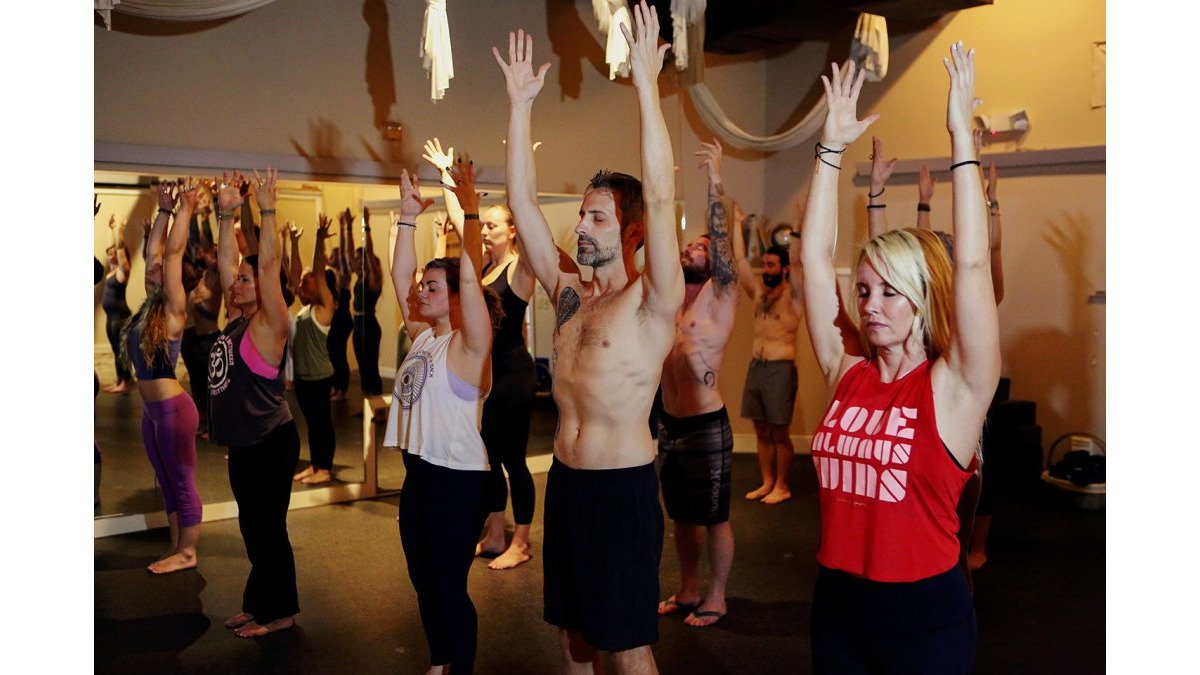
At Hot Asana Studio, we see this play out in our heated Pilates and sculpt classes every week: people arrive wanting "toning" and leave with better balance, coordination, and posture, muscle definition built on core stability rather than isolated exercises.
The practical payoff is a routine you can sustain. A Pilates strength hybrid typically runs three to four sessions a week, mixing mat, wall, or reformer Pilates with dumbbells, bands, or bodyweight resistance training.
Below, we break down seven hybrid options, from instructor-led classes to at-home video libraries, plus a weekly schedule. But first, here's what most guides get wrong: they treat Pilates as a warm-up for lifting instead of a training method in its own right.
What the Research Says About Combining Methods
Exercise science generally supports combining stability work with resistance training rather than choosing one. Pilates contributes core strength, flexibility, and mobility; resistance training contributes muscle building and bone loading.
What the research does not support is that Pilates burns dramatic calories or replaces cardio.
One more honest note: claims that a hybrid routine "sculpts" you in weeks deserve skepticism. Strength gains and visible muscle definition come from consistent progressive overload over months, not from any single program.
1. Hot Asana Studio: Best for Instructor-Led Hybrid Classes
Our top pick for anyone who wants the hybrid done for them is Hot Asana Studio. Our heated Pilates and sculpt classes combine Pilates-inspired movements with strength work in one instructor-led session, so you never guess how to sequence the two.

(/post/beginner-friendly-pilates-classes-in-north-conway), which adds spring resistance to classic Pilates movements. Reformers support the body while challenging stability, making them a good bridge between mat Pilates and resistance training.
The catch: reformer work requires a studio, so this is a complement to your strength sessions, not a replacement for them.
6. Carrie's Pilates: Best for Strength-First Guidance
Carrie's Pilates approaches the hybrid from the strength side, framing Pilates as a complement to strength training rather than the reverse. That perspective suits lifters who want better core stability and mobility without abandoning the barbell.
Where it falls short: the supplied materials don't establish a specific routine or schedule, so treat it as guidance rather than a program.
7. Daily Burn Pilates at Home Guide: Best No-Equipment Starting Point
Daily Burn's Pilates at Home guide is the beginner-friendly entry point: six foundational exercises, a four-week beginner plan, and no equipment required. Exercises like The Hundred, Roll Up, Single Leg Circles, Shoulder Bridge, Dead Bug, and Toe Taps build the core strength you'll need before adding load.
The limitation is real: the plan covers Pilates, not strength training. Pair it with two weekly resistance sessions to make it a true hybrid.
Program | Format | Best For | Equipment | Structured Plan |
Hot Asana Studio | In-studio classes | Instructor-led hybrid | Mats, light weights | Weekly class schedule |
Pilates x Lift | Written plan | Structure seekers | Varies | 4 weeks |
Strength X Pilates V2: Home | Home program | At-home training | Minimal | Program-based |
B the Method | Video library | Flexible scheduling | Mat | Self-directed |
BODYROK | Reformer studio | Reformer fans | Reformer | Class-based |
Carrie's Pilates | Guidance | Strength-first lifters | Varies | Not specified |
Daily Burn Guide | Written guide | Beginners | None | 4 weeks |
How to Build Your Weekly Pilates and Strength Training Schedule
A workable Pilates and strength training weekly schedule runs three to four combined sessions: two full-body strength days, one or two Pilates days, and optional cardio. Keep at least one rest day between heavy strength sessions, and never stack a heavy lower-body day directly against a long wall Pilates or reformer session that loads the same joints.
The schedule below is the beginner template. Adjust volume and intensity using the level notes that follow.
Beginner week (weeks 1-4)
Monday: Full-body strength, squat, hinge, push, pull. 2-3 sets of 8-12 reps, 60-90 seconds rest between sets. Session: 30-40 minutes.
Tuesday: Mat Pilates, 20-30 minutes, focus on core stability (Dead Bug, Shoulder Bridge, Toe Taps, The Hundred).
Wednesday: Rest or easy walk (20-30 minutes, conversational pace).
Intermediate week (weeks 5-12)
Add a third strength day (for example, Saturday) and move cardio to a 10-minute finisher on two strength days.
Strength: 3-4 sets of 6-10 reps, 90-120 seconds rest. Session: 40-50 minutes.
Pilates: 30-40 minutes, twice weekly, adding tempo changes (3-second lowering) and single-leg progressions.
Advanced week (week 13+)
Four strength sessions (upper/lower split or push/pull), 4 sets of 5-8 reps on primary lifts, 2-3 minutes rest.
Two Pilates sessions of 40-45 minutes with advanced levers (long-lever Shoulder Bridge, single-leg Roll Up, loaded wall series).
One HIIT session of 20 minutes and one mobility session.
Can you do Pilates and weight training on the same day? Yes. Put strength first while you're fresh, then finish with 10-15 minutes of Pilates as a cooldown that reinforces core stability. On same-day doubles, cap total session time at 60-75 minutes and avoid pairing heavy deadlifts with long prone-extension Pilates work.
Scheduling trade-offs to plan for
Time-crunched week: two 30-minute full-body strength sessions plus one 20-minute mat Pilates session still preserves the hybrid stimulus.
Soreness or poor sleep: replace the second strength day with wall Pilates or a walk rather than pushing through.
Travel: bodyweight strength (split squat, push-up, hip hinge) plus a 15-minute mat flow keeps the pattern intact.
Watch Out The most common mistake is stacking heavy lifting and intense Pilates back-to-back with no recovery day. That pattern produces fatigue, not progress. Space them out, and treat sleep and soreness as scheduling inputs, not afterthoughts.
How to Progress and Measure Results
Progression in a Pilates strength hybrid comes from four levers: load, control, complexity, and volume. Change one lever at a time, and only when the current stimulus feels manageable for two consecutive sessions.
The four progression levers
Load: Add resistance when you complete all prescribed sets and reps with clean form and 1-2 reps left in reserve. For dumbbells, the smallest practical jump is usually 2.5-5 lb per hand; for bands, move to the next thickness. Bodyweight strength progresses by slowing the lowering phase to 3-4 seconds or adding a pause at the bottom.
Control: In Pilates, progress by slowing tempo (for example, a 3-second Roll Up), pausing at end range, or reducing leverage (bent knees to straight legs). Control is the Pilates equivalent of adding weight.
Complexity: Add single-leg or single-arm variations, unstable surfaces (only after baseline stability), or combine movements (Shoulder Bridge march, Dead Bug with extended arm).
Level-specific adjustments
Beginner: 2-3 sets of 8-12 reps on strength; 20-30 minutes of Pilates. Progress load every 2 weeks if form holds. Expect the first 4-6 weeks to feel like technique practice, not maximal effort.
Intermediate: 3-4 sets of 6-10 reps; 30-40 minutes of Pilates twice weekly. Add tempo and single-leg work before adding load. Progress every 1-2 weeks.
Advanced: 4 sets of 5-8 reps on primary lifts with 2-3 minutes rest; 40-45 minutes of Pilates with advanced levers. Progress load weekly or biweekly, and deload (cut volume by roughly 40%) every 4-6 weeks.
What to measure (and what to ignore)
Track three markers weekly:
Strength: the weight and reps you lift on two or three anchor exercises (for example, goblet squat, row, push-up variation).
Stability endurance: how long you hold a stable plank or Shoulder Bridge with clean form, add 5-10 seconds per week until you reach 60 seconds, then progress the variation.
Movement quality: balance in single-leg work and whether daily posture and low-back comfort improve.
The scale is a poor short-term marker. Strength gains and visible muscle definition come from consistent progressive overload over months, not weeks. Fat loss is driven primarily by calorie balance and cardiovascular activity; Pilates and strength training support it by preserving muscle, not by spot-reducing any area.
Recovery and adaptation
Sleep 7-9 hours where possible; poor sleep is the most reliable predictor of a stalled session.
Keep at least one full rest day and one active-recovery day per week.
If grip strength, motivation, or rep quality drops for two consecutive sessions, take a deload week (roughly half the sets, same exercises).
Key Takeaway Strength gains and fat loss are separate outcomes. Resistance training builds muscle; cardio and nutrition drive fat burning. A hybrid routine supports both only when you train both, progress one lever at a time, and measure strength and stability, not just the scale.
Frequently Asked Questions
What is the best way to combine Pilates and strength training?
The most effective approach is to alternate focused sessions rather than stack them back-to-back without rest. Aim for two to three strength sessions and two Pilates sessions per week, with at least one full rest day. If you train on the same day, do strength work first while you are fresh, then finish with 15 to 20 minutes of mat Pilates for core stability and mobility. This sequencing supports muscle building while still developing the deep trunk control Pilates is known for.
How many days a week should I do Pilates and strength training?
Most people do well with four to five training days total. A practical split is two or three strength sessions and two Pilates sessions, leaving two or three days for walking, stretching, or complete rest. Beginners should start with two strength days and one Pilates day for the first two weeks, then add a session once recovery feels comfortable. The weekly schedule section above maps out exactly how to arrange those days so your muscles have time to adapt.
Can Pilates and strength training be done on the same day?
Yes, and many hybrid routines are built that way. Keep the combined session under about 60 minutes, put the strength work first, and use Pilates as a cooldown or core finisher. Avoid pairing heavy lower-body lifting with an intense leg-focused Pilates class on the same day. If you feel unusually sore or fatigued, split the sessions across the week instead. Same-day training works best when one of the two sessions is lighter.
Can Pilates build muscle like strength training?
Pilates builds endurance, core stability, and muscle definition, but it is not a direct substitute for progressive resistance training when the goal is maximal muscle growth. Bodyweight Pilates provides limited load, so adding dumbbells, resistance bands, or a reformer increases the challenge. A hybrid routine gives you the best of both: strength training supplies the load for building muscle, and Pilates improves the control, balance, and mobility that let you lift well.
What equipment do I need for a Pilates and strength workout?
A mat, a set of light to medium dumbbells, and a resistance band cover most hybrid routines. A Pilates ring or small ball adds variety for inner-thigh and core work, and sliders are optional. Reformer classes require studio equipment, so check whether your local studio supplies it. At home, bodyweight movements like the Hundred, Shoulder Bridge, and Dead Bug need no equipment at all, which makes a beginner routine easy to start today.
Building a routine that balances core stability with real strength work takes guidance, and that's where we come in. Hot Asana Studio offers heated Pilates and sculpt classes designed for all levels, expert instructors who modify movements for injuries, and easy Mindbody scheduling so you can lock in your week. Register now through our Intro Offer and start your hybrid routine with coaching that meets you where you are.
Register Now
Add hotasanastudionh.com as a preferred source on Google →
Comments