
Finding Community Through Yoga Classes: A Guide

Table of Contents
Why Yoga Classes Build Real Community
How to Find a Yoga Community That Fits You
A Fit Checklist You Can Score
Compare Formats, Not Just Studios
The Benefits of Group Yoga Classes Beyond the Mat
What to Expect at Your First Class
Why Beginner-Friendly Yoga Classes Make Connection Easier
Making Friends Through Yoga: From Classmates to Community
Small Habits That Turn Acquaintances into Friendships
Online and Hybrid Yoga Communities
How to Find an Online or Niche Community
What Online Practice Does Well
What It Does Less Well
Make Online Practice Social on Purpose
Conclusion
Frequently Asked Questions
Last Updated: October 15, 2026
Why Yoga Classes Build Real Community
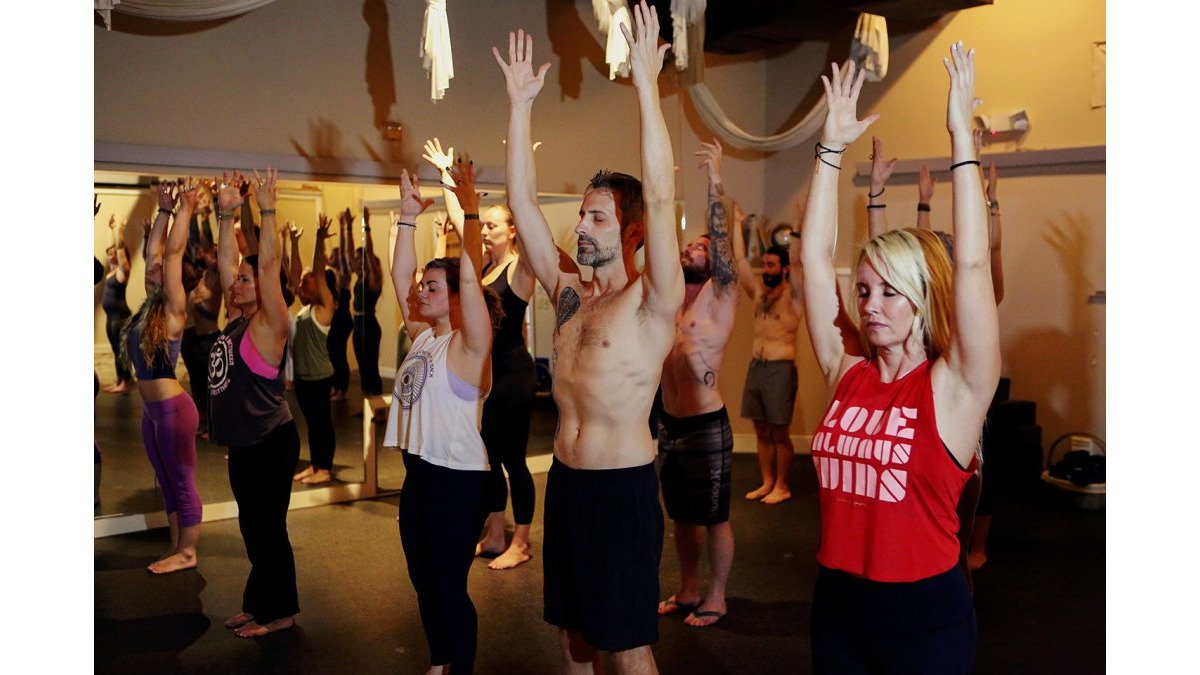
Finding community through yoga classes happens because shared practice creates something a solo workout can't: a room full of people breathing, moving, and struggling through the same poses at the same time. That shared experience builds belonging fast.
Yoga means union. The word itself points to connection, not just flexibility.
At Hot Asana Studio, we see this play out every week. A newcomer walks in nervous, takes a spot near the back, and by the end of class someone has introduced themselves. That small moment is where community starts.
The National Institutes of Health overview of yoga notes that yoga combines movement with breath and mindfulness. Practicing alongside others adds a social layer that many people find just as valuable as the physical benefits.

You don't need to be outgoing to benefit. You just need to show up to the same class more than once.
Key Takeaway Community in yoga isn't built in one class. It's built by returning to the same room, at the same time, with the same faces. Consistency does more for connection than charisma.
How to Find a Yoga Community That Fits You
The best way to find a yoga community is to treat the search like a short experiment: try a few formats, watch how people interact, and pick the room where returning feels easy. Fit matters more than prestige, and fit is measurable if you know what to look for.
Start with a two-week search plan:
List 3-4 options within a reasonable drive
Sort them by schedule fit first, then by class style
Book a single drop-in or intro offer at each
Arrive 10-15 minutes early and talk to the teacher
Stay 5 minutes after class and watch whether students linger
Score each option using the checklist below before committing
That last step tells you more than any website. Do people linger and talk? Do regulars greet newcomers? A studio where the room empties in 90 seconds is telling you something.
A Fit Checklist You Can Score
Rate each studio from 1 to 5 on these dimensions, then compare totals:
Class levels: Beginner-friendly classes should be labeled, not implied
Class size: Smaller classes make it easier to get help and meet people
Schedule fit: A studio you can reach twice a week beats a better one you visit monthly
Tone: Welcoming beats intense when you're building connections
Trial options: A low-commitment intro offer lets you test the fit
Accessibility: Step-free entry, props, chair options, and teachers who offer modifications
Cost structure: Drop-in, class packs, memberships, sliding scale, or donation-based
Social atmosphere: Do students talk before and after class, or file out silently?
Ask about accessibility directly. If you have a bad knee or a chronic condition, ask how teachers handle modifications. A good studio will answer that question without hesitation.
Compare Formats, Not Just Studios
Different formats attract different crowds, and the crowd is the community:
Studio classes: Highest chance of repeat faces and post-class conversation
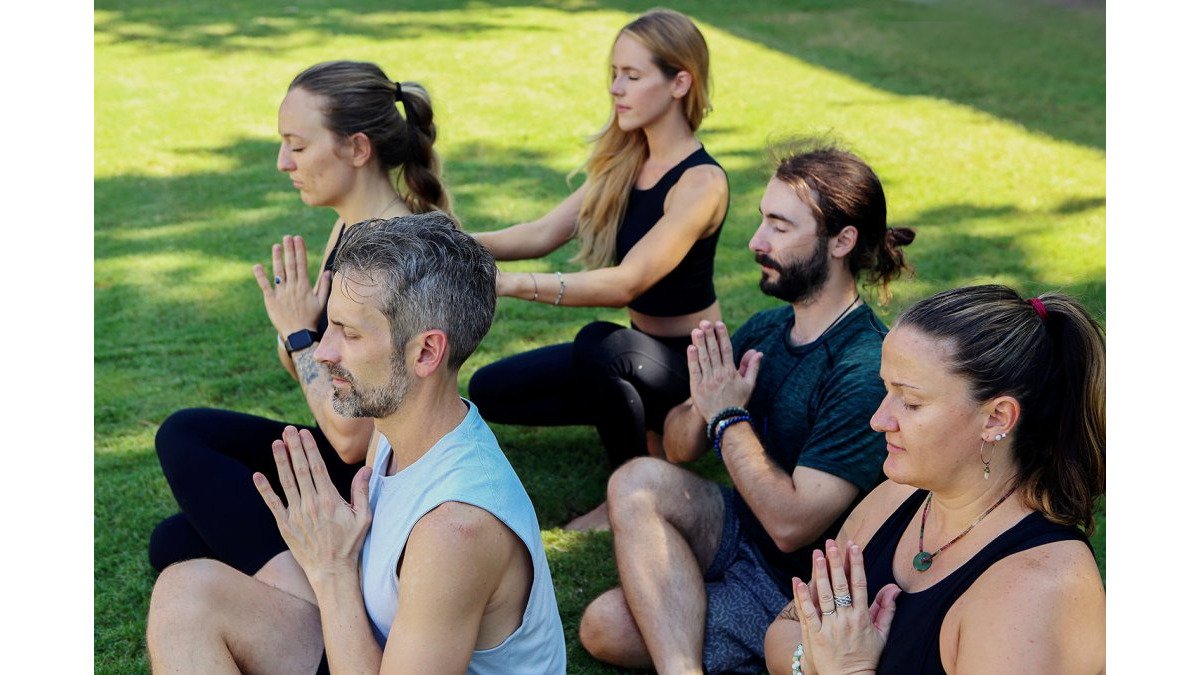
Community and donation-based classes: Lower cost, often held in parks, libraries, or community centers, and typically more casual and social
Gym classes: Convenient, but students often leave immediately after
Online live classes: Real-time connection, but chat replaces hallway conversation
Niche classes (prenatal, seniors, adaptive, recovery-focused): Built-in shared context that makes conversation easier
If cost is the barrier, look for intro offers before ruling out a membership.
Watch Out A common mistake is committing to a monthly membership at the first studio you visit. If the schedule doesn't match your life, you'll stop going, and community never forms. Try a few single classes first, then commit to the one you actually returned to.
The Benefits of Group Yoga Classes Beyond the Mat
The benefits of group yoga classes extend past strength and flexibility into accountability and social support.
Practicing with others keeps you consistent. When people expect you in class, you show up. That accountability is one reason group practice sticks when solo routines fade.
Other benefits include:
Less isolation: You're in a room with people, not alone with a video
Faster learning: Teachers can correct your form in person
Emotional support: Tough days feel lighter when others share the room
Structure: A set class time removes the "when should I practice?" decision
Belonging: Seeing the same faces builds familiarity and trust
Many people find that the social side of class becomes the reason they keep coming back, even after the physical goals are met.
What to Expect at Your First Class
Your first class will likely include a welcome, a warm-up, a series of poses with options for different levels, and a guided relaxation at the end.
Here's what usually happens:
You arrive, check in, and set up your mat
The teacher asks about injuries or concerns
Class starts with breathing and gentle movement
Poses build in intensity, with easier versions offered
Class ends with quiet rest, often called savasana
Students often chat on the way out
You do not need to be flexible or fit. You need comfortable clothes and water.
Tell the teacher it's your first class. That one sentence changes how they guide you.
Pro Tip Arrive early on your first day and introduce yourself to the teacher. In practice, this is the single fastest way to feel less like a stranger. Teachers remember faces and often make introductions to regulars.
Why Beginner-Friendly Yoga Classes Make Connection Easier
Beginner-friendly yoga classes make connection easier because everyone is learning together. No one is watching you struggle, because they're focused on their own poses.
When you're the newest person in an advanced class, it's easy to feel out of place. In a beginner class, that pressure disappears.
Look for classes described as gentle, foundational, or open to all levels. These tend to attract people at similar stages, which makes conversation easier.
Ask these questions before you book:
Is this class designed for people with no experience?
Will the teacher offer modifications for injuries?
How many students typically attend?
Is there time to ask questions after class?
A welcoming environment is not a bonus. It's the foundation of finding community through yoga classes that last.
Making Friends Through Yoga: From Classmates to Community
Turning classmates into friends takes small, repeated actions. The friendship doesn't appear on its own.
Start with eye contact and a simple hello. Then build from there.
Small Habits That Turn Acquaintances into Friendships
Arrive 10 minutes early and talk to whoever is nearby
Attend the same class time each week
Learn two or three names and use them
Stay after class instead of rushing out
Ask a simple question: "How long have you been coming here?"
Suggest coffee or a walk after a weekend class
None of these are complicated. The key is repetition. Community grows from seeing the same people often.
Here's a quick reference:
Habit | How Often | Why It Works |
Same class time | Weekly | Familiar faces become friends |
Arrive early | Every class | Creates time to talk |
Learn names | First month | Makes people feel seen |
Stay after class | Most classes | Builds real conversation |
Suggest plans | Once comfortable | Moves beyond small talk |
Best For People who feel shy about starting conversations. These habits require almost no social skill, just consistency.
Online and Hybrid Yoga Communities
Online and hybrid yoga communities offer connection when you can't get to a studio, but they only work if you participate rather than just log in. The difference between watching a video and joining a community is the same as the difference between a solo workout and a class: interaction.
Live-streamed classes let you practice in real time with a teacher and other students. Some studios also offer recorded sessions with comment threads or group chats. The community lives in the chat, the breakout rooms, and the recurring faces you start to recognize on screen.
How to Find an Online or Niche Community
Start with studios you already know: Many local studios now offer hybrid memberships that include both in-person and live-streamed classes
Search by shared context, not just style: Prenatal, seniors, adaptive, recovery, and beginner series often build tighter groups than general classes
Look for recurring cohorts: A six-week series creates the same familiar faces that a weekly in-person class does
Check for a chat or forum: A class with an active group chat has a community; a class with only a video feed does not
Try a niche platform: Interest-based groups organized around a specific condition, life stage, or goal tend to be more social than general catalogs
What Online Practice Does Well
Fits odd schedules and long commutes
Removes travel time
Keeps you connected when you're traveling or unwell
Opens access to teachers and communities outside your area
What It Does Less Well
Fewer chances for casual conversation
Harder to build real friendships without deliberate effort
Less accountability than a room full of people
Make Online Practice Social on Purpose
Turn your camera on when you're comfortable; it makes you a familiar face
Arrive a few minutes early and use the waiting-room chat
Use the same class time each week so you see the same people
Speak up in breakout rooms or Q&A segments
Follow up in the group chat after class
If you split your time between in-person and online classes, you get the flexibility of one and the connection of the other. Many studios now offer both, which makes it easier to stay consistent.
The CDC guidance on physical activity points out that regular movement supports both physical and mental health. Doing it with others adds a social benefit that solo workouts often miss.
Pro Tip Treat an online class like an in-person one: show up early, turn your camera on, and stay for the chat. The people who build community online are the ones who participate, not the ones who watch.
Conclusion
Building a yoga community takes patience and repetition, not personality. The challenge is showing up often enough for strangers to become familiar faces.
At Hot Asana Studio, we built our studio around exactly that. Our heated yoga, Pilates, and sculpt classes welcome every level, and our teachers know how to modify poses for injuries and beginners. Our Mindbody scheduling makes it easy to book from your phone and find a class time that fits your week. We also take a holistic approach to wellness, including a focus on plant-based nutrition.
Get started with Hot Asana Studio and find the community you've been looking for.
Frequently Asked Questions
Are yoga classes a good way to meet people?
Yes. Yoga classes put you in the same room with the same people on a regular schedule, which is how friendships usually start. Unlike a gym where everyone wears headphones, a yoga class includes shared breathing, guided relaxation, and often a few minutes of conversation before or after. Attending the same class time each week helps you recognize familiar faces, and that repetition is what turns strangers into acquaintances and eventually into a yoga community.
How often should I attend classes to get to know other students?
Two to three times per week at the same studio and, ideally, the same class times works well. Consistency matters more than frequency. If you show up at the same Tuesday evening class for a month, you will start recognizing the same students and instructor. Many studios offer memberships with a set number of classes per month, which makes a regular schedule easier to keep and gives you more chances to talk with the people around you.
I've never done yoga before. How do I find a beginner-friendly yoga class?
Look for classes labeled beginner, gentle, or open level, and check whether the studio describes its instructors as trained to offer modifications. Call or email ahead and ask how the teacher handles new students and whether props like blocks and straps are provided. A good beginner-friendly yoga class will explain poses, move at a slower pace, and never single anyone out. Many studios offer an intro offer so you can try a class before committing to a membership.
How can I feel more comfortable attending a yoga class alone?
Arrive 10 to 15 minutes early and introduce yourself to the instructor. Mention that it is your first class so they can point out where to set up and what to expect. Choose a spot near the back or middle if you prefer less attention. After class, a simple comment to the person next to you about the sequence or the heat level often starts a conversation. Most people in a yoga community remember being new and are happy to talk.
Register Now

Comments