
Yoga Sculpt vs Weight Lifting: Which Builds Strength?

Table of Contents
Yoga Sculpt vs Weight Lifting: Core Differences
What Yoga Sculpt Actually Is
How Traditional Weight Lifting Works
Is Yoga Sculpt Strength Training?
Yoga Sculpt Benefits: What to Expect
Muscle Toning and Body Composition
Flexibility, Balance, and Joint Health
Cardiovascular Conditioning and Endurance
What Yoga Sculpt Doesn't Do Well
Yoga Sculpt for Building Muscle: Realistic Outcomes
Weight Lifting for Muscle Strength and Development
Progressive Overload and Strength Gains
Muscle Fiber Recruitment and Hypertrophy
Yoga Sculpt and Weight Lifting Schedule: Combining Both
Which Should You Choose? Goal-Based Recommendations
Match Your Primary Goal to the Format
Choose Yoga Sculpt If
Choose Traditional Weight Lifting If
Combine Both for Maximum Results
A Practical Weekly Template
When to Reassess
Safety, Technique, and Injury Prevention
Frequently Asked Questions
Last Updated: October 12, 2026
Yoga Sculpt vs Weight Lifting: Core Differences
When deciding between yoga sculpt vs weight lifting, the choice comes down to what you're trying to achieve. Both build strength, but in fundamentally different ways.

Yoga sculpt blends flowing yoga movements with light hand weights, resistance bands, and bodyweight exercises at moderate intensity. Traditional weight lifting uses progressively heavier loads, barbells, dumbbells, machines, to trigger muscle growth and maximum strength gains.
Here's what you need to know to make the right call.
What Yoga Sculpt Actually Is
Yoga sculpt is a hybrid format that adds light resistance work to flowing yoga sequences.
The format emphasizes controlled movement and sustained tension rather than maximum load: expect 20-30 reps with light weights, versus 5-8 heavy reps in traditional strength training.
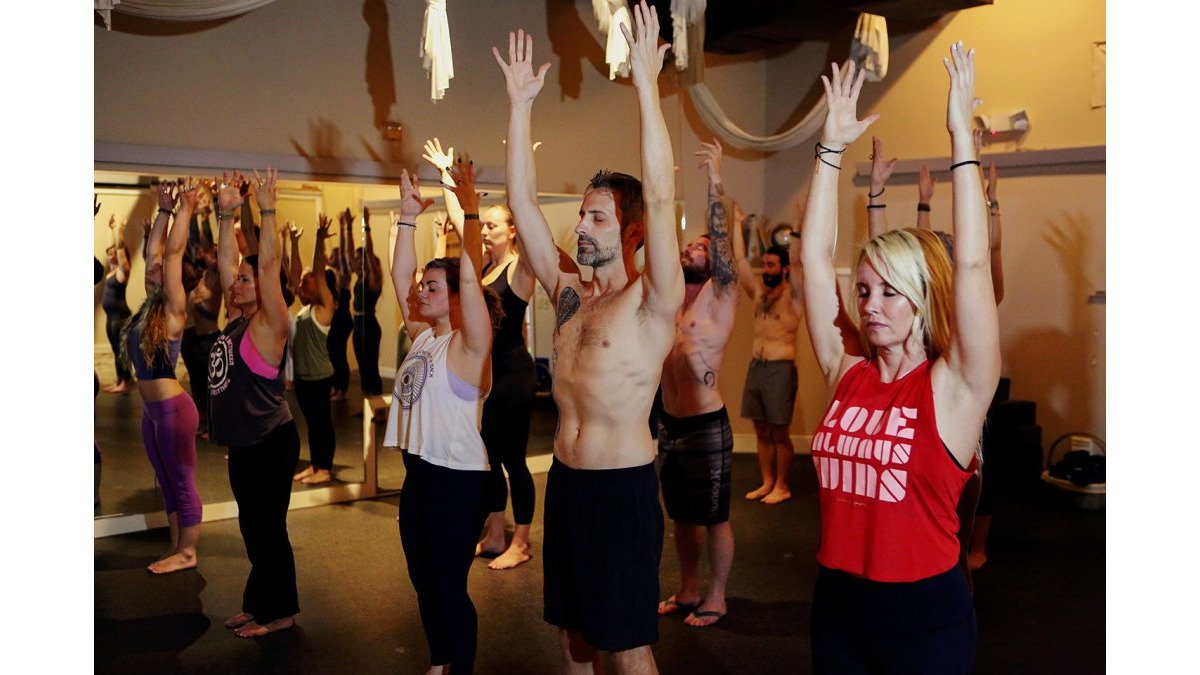
Many studios, including Hot Asana Studio, teach yoga sculpt in heated rooms. The heat increases flexibility and cardiovascular demand, adding a conditioning element.
How Traditional Weight Lifting Works
Traditional weight lifting relies on progressive overload, gradually increasing weight, reps, or sets to force muscle adaptation.
The mechanism is straightforward: heavy resistance damages muscle fibers, and your body repairs them larger and stronger.
Programs typically follow structured periodization, phases emphasizing strength, hypertrophy, or endurance, with planned progression and recovery. Progress is measurable: adding 5 pounds to your squat, hitting a PR, or increasing total volume.
Is Yoga Sculpt Strength Training?
Yes, yoga sculpt qualifies as strength training, it uses resistance (weights, bands, bodyweight) to create muscular demand. But the caveats matter.
The stimulus is lighter and progression works differently. Yoga sculpt builds muscular endurance and body composition more effectively than maximum strength or size.
Think of it this way: yoga sculpt is strength training the way swimming is cardiovascular training. Both work.
Yoga Sculpt Benefits: What to Expect
Yoga sculpt's benefits are real but specific. Here's an outcome-by-outcome comparison of where each format delivers.
Muscle Toning and Body Composition
Yoga sculpt builds visible definition through moderate-load, high-rep work: hand weights in the 1-5 pound range, bands, and bodyweight holds for 20-30 reps or 30-60 second isometrics. That creates metabolic stress and muscular endurance, the drivers of the "toned" look, rather than the mechanical tension that produces size.
The body composition outcome differs in kind, not just degree:
Yoga sculpt: Builds muscular endurance and definition. Calorie burn during a 45-60 minute class commonly falls in the 300-500 calorie range depending on body weight, intensity, and whether the room is heated. The elevated heart rate can produce a modest afterburn effect.
Traditional lifting: Builds muscle size and strength. A 45-60 minute session burns fewer calories in the moment (often 200-400), but the muscle tissue built raises resting metabolic rate over time, which is why lifters often see body composition shift over months rather than weeks.
Gains plateau because the load stays light, that's the format's design, not a flaw.
Flexibility, Balance, and Joint Health
This is yoga sculpt's clearest advantage. Flowing sequences move joints through full ranges of motion under light load, maintaining and often improving flexibility while building strength.
Balance and stability improve through single-leg poses, transitions, and holds that challenge proprioception, translating to better daily movement quality and reduced fall risk, especially for older adults.
Lower impact reduces joint stress, so yoga sculpt often feels more sustainable than barbell work for people with arthritis, previous injuries, or chronic pain.
Cardiovascular Conditioning and Endurance
Yoga sculpt classes, especially heated formats, elevate heart rate across 45-60 minutes, building cardiovascular endurance alongside muscular endurance.
The conditioning effect is real but secondary. For maximum cardiovascular fitness, dedicated cardio (running, cycling, rowing) improves VO2 max faster. Still, yoga sculpt adds meaningful conditioning, and its muscular endurance carries over to higher-rep gym sets.
What Yoga Sculpt Doesn't Do Well
Honest comparison means naming the limits. Yoga sculpt is a poor fit if your primary goals are:
Maximal strength, you won't add meaningful weight to a squat or deadlift through 3-pound dumbbells.
Significant muscle hypertrophy, light loads don't create enough mechanical tension for large size gains.
Bone density improvement, the loads are generally too light to drive the osteogenic response that heavy resistance training provides.
Key Takeaway Yoga sculpt wins on flexibility, balance, joint-friendly strength, and mind-body benefits. Traditional lifting wins on maximal strength, muscle size, bone density, and measurable progression. If you want both, you don't have to choose, the next sections show how to combine them.

Yoga Sculpt for Building Muscle: Realistic Outcomes
Yoga sculpt builds muscle within limits. Light weights and high reps trigger growth through metabolic stress and muscular damage, just not as efficiently as heavier loads.
Realistic expectations: noticeable tone within 4-8 weeks, visible body composition changes within 8-12 weeks, then gradual gains that plateau because the stimulus stays constant.
If maximum muscle size or strength is your goal, yoga sculpt alone won't get you there.
Weight Lifting for Muscle Strength and Development
Progressive Overload and Strength Gains
Traditional weight lifting builds strength through progressive overload: lift heavier, add reps at the same weight, or add volume over time to force continuous adaptation.
Measurable gains come quickly.
The key is consistency and progression: a structured program tracks your lifts and gradually increases demand. Without structure, strength plateaus.
Muscle Fiber Recruitment and Hypertrophy
Heavy loads recruit more muscle fibers and create greater mechanical tension, the primary driver of growth, by requiring maximum motor unit activation.
Light weights, even for high reps, recruit fewer fibers and create less mechanical tension. Metabolic stress contributes to growth, but the effect is smaller than heavy lifting.
That's why bodybuilders and strength athletes prioritize heavy compound lifts: they're the most efficient way to build size and strength.
Yoga Sculpt and Weight Lifting Schedule: Combining Both
The two approaches complement each other. A balanced week might include 2-3 weight lifting sessions plus 1-2 yoga sculpt or traditional yoga classes.
Heavy lifting builds strength and muscle; yoga sculpt improves flexibility, balance, and muscular endurance while aiding recovery. Together they cover multiple fitness dimensions.
A practical schedule:
Monday/Thursday: Weight lifting (lower body and upper body splits)
Tuesday/Friday: Yoga sculpt or heated yoga
Wednesday: Light conditioning or stretching
This allows adequate recovery between heavy sessions. Adjust frequency to your recovery capacity and schedule.
Which Should You Choose? Goal-Based Recommendations
Most articles tell you both are good and to do what you enjoy. That's not useful. Here's a decision framework based on what you're actually trying to achieve.
Match Your Primary Goal to the Format
Your primary goal | Best format | Realistic timeline | Why |
Maximal strength (lift heavier) | Traditional lifting | 4-6 weeks for first 10-20% gains | Requires progressive overload with heavy loads |
Muscle size (hypertrophy) | Traditional lifting | 8-12 weeks for visible change | Mechanical tension from heavy loads drives growth |
Flexibility and mobility | Yoga sculpt | 4-6 weeks for noticeable range-of-motion gains | Full-range movement under light load |
Balance and fall prevention | Yoga sculpt | 6-8 weeks for measurable improvement | Proprioceptive challenge from single-leg work |
General fitness and stress relief | Either, pick what you'll do consistently | Ongoing | Adherence beats optimization |
Joint-friendly strength | Yoga sculpt | 4-8 weeks | Lower impact, modifiable loads |
Bone density | Traditional lifting | 6-12 months for measurable change | Requires heavier loads than sculpt provides |
Body composition (fat loss) | Either, with nutrition driving results | 8-12 weeks | Calorie balance matters more than format |
Athletic performance | Traditional lifting plus mobility work | Varies by sport | Power and strength need heavy loads; mobility needs yoga |
Choose Yoga Sculpt If
Flexibility, balance, and joint health matter as much to you as strength.
You're returning from injury or managing chronic pain and need low-impact loading.
You want the mind-body and stress-relief benefits of breath-led movement.
Choose Traditional Weight Lifting If
Maximum strength or muscle size is your primary goal.
You want measurable, trackable progress (weight on the bar, rep PRs).
You enjoy structured programming.
Combine Both for Maximum Results
For most general fitness goals, combining the two outperforms either alone: lifting builds the strength and muscle foundation, while yoga sculpt maintains mobility, supports recovery, and adds conditioning. It's especially valuable for:
Athletes needing strength, mobility, and conditioning.
Older adults wanting strength without heavy joint stress.
People returning from injury needing gradual, modifiable progression.
A Practical Weekly Template
If you're combining both, a workable structure looks like this:
Monday: Weight lifting, lower body (squat or deadlift focus)
Tuesday: Yoga sculpt class
Wednesday: Weight lifting, upper body (press or row focus)
Adjust based on recovery. New to lifting? Start with 2 sessions per week and add sculpt on non-lifting days. New to sculpt? Start with 1-2 classes and add lifting once your body adapts. If you're just getting started with yoga sculpt, the Flow Membership 8 classes/month offers a flexible way to build consistency without overcommitting.
Watch Out Don't stack a heavy lifting session and an intense heated sculpt class on the same day when you're starting out. The combined fatigue raises injury risk and blunts recovery. Separate them by at least 24 hours until you know how your body responds.
When to Reassess
Give any approach 8-12 weeks before judging results. If your primary goal hasn't moved, strength stalled, flexibility unchanged, body composition flat, shift the balance between formats or adjust your programming. Consistency over 12 weeks beats a perfect plan followed for three.
Key Takeaway Pick the format that matches your primary goal, then add the other to cover its weaknesses. Strength and muscle goals point to lifting; mobility, balance, and joint-friendly work point to yoga sculpt. Most people get the best long-term results from both.

Safety, Technique, and Injury Prevention
Proper form matters in both, for different reasons: poor technique under heavy load causes acute injuries in lifting, while accumulated stress from misalignment causes chronic issues in yoga sculpt.
Work with qualified instructors in both.
Common mistakes: lifting too heavy with poor form, high reps with bad alignment, stacking intense yoga sculpt on heavy lifting without recovery, and ignoring pain signals.
The right choice depends on your goals, preferences, and fitness level. Yoga sculpt excels at functional strength, flexibility, and body composition in a sustainable, community-focused setting.
At Hot Asana Studio, we design our sculpt classes to complement your overall fitness routine while building strength, flexibility, and mental clarity. Try our Intro Offer to experience how our heated yoga sculpt classes fit your fitness goals.
Frequently Asked Questions
Is yoga sculpt considered strength training?
Yes, yoga sculpt qualifies as strength training because it uses resistance, typically light hand weights, resistance bands, and bodyweight exercises, to build muscle strength and endurance. However, it differs from conventional strength training in intensity and load progression. Yoga sculpt uses lighter weights and higher repetitions within flowing sequences, while traditional weight lifting emphasizes heavier loads with lower reps to maximize muscle growth. Both build strength, but through different mechanisms and timelines.
Can yoga sculpt build muscle?
Yoga sculpt can build lean muscle tone and muscular endurance, particularly in the core, shoulders, arms, and legs. The combination of bodyweight exercises, light weights, and repetitive movement patterns creates a stimulus for muscle adaptation. However, the muscle-building results are typically more modest than conventional weight lifting because yoga sculpt uses lighter loads and prioritizes range of motion and flexibility alongside strength. For significant muscle mass gain, weight lifting with progressive overload is more effective.
Can you combine yoga sculpt and weight lifting?
Absolutely. Many people combine both for comprehensive fitness results. A practical schedule might include 2-3 days of weight lifting for strength and muscle development, plus 1-2 days of yoga sculpt or traditional yoga for flexibility, balance, core stability, and active recovery. This cross-training approach reduces injury risk, improves mobility, and supports cardiovascular conditioning. Allow at least one rest day per week, and listen to your body to avoid overtraining.
Which is better for beginners: yoga sculpt or weight lifting?
Yoga sculpt is typically more beginner-friendly because instructors guide you through movement patterns within a flowing class, and light weights reduce intimidation and injury risk. The low-impact nature suits people new to fitness or recovering from injury. Weight lifting requires more technical skill and form awareness, though beginners can start with lighter loads and bodyweight exercises. If you're entirely new to fitness, yoga sculpt offers a welcoming entry point; if you're comfortable with structure and progression, weight lifting works well too. Many beginners benefit from starting with yoga sculpt, then adding weight lifting as confidence builds.
Register Now

Comments